House Fly – A Sanitary Hazard Indoors
House Fly – A Sanitary Risk in Homes and Businesses
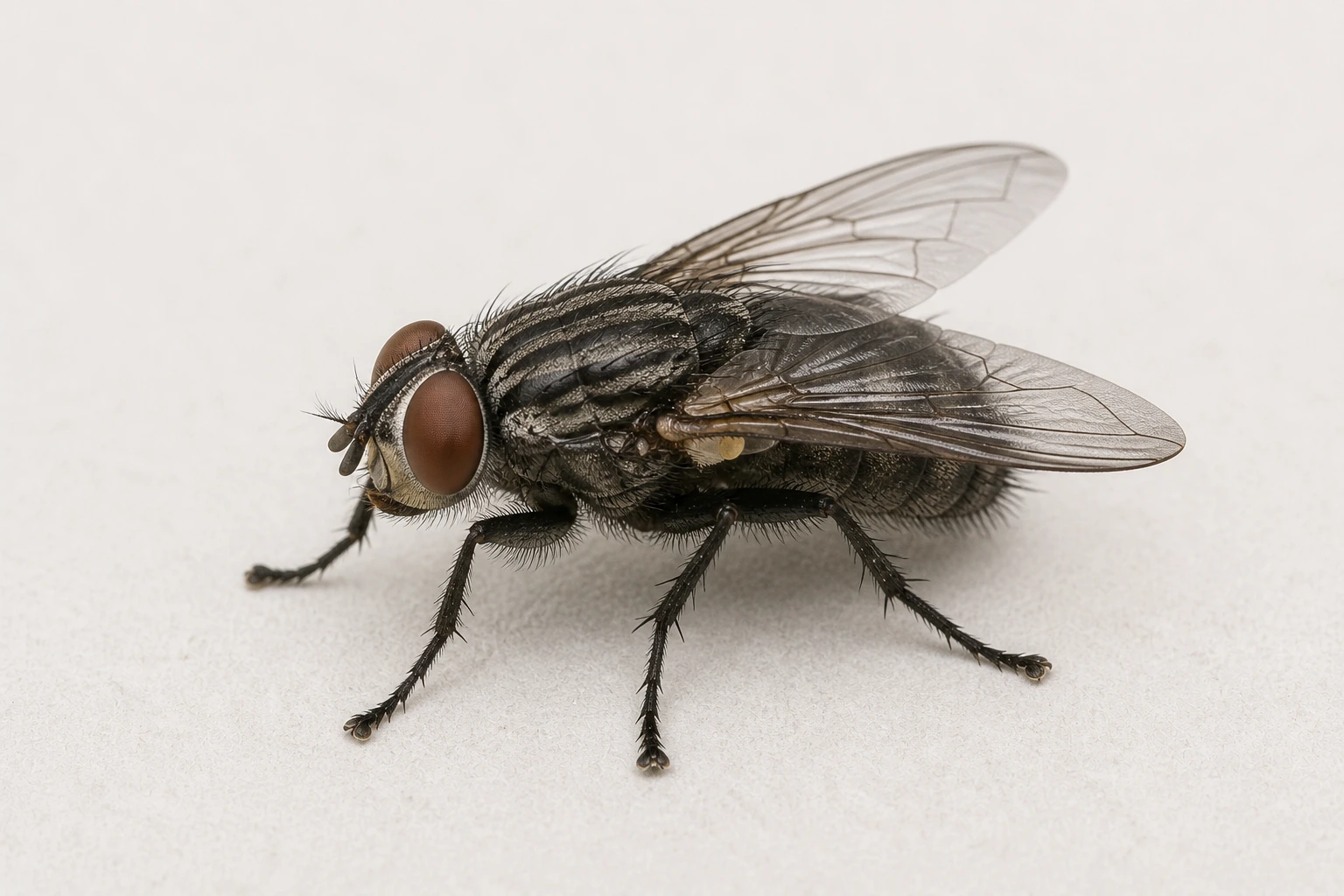
The house fly (Musca domestica) is one of the most widespread sanitary pests in the world.
It reproduces rapidly, contaminates food and surfaces, and carries more than 100 different disease-causing pathogens.
Adult flies are 5–8 mm long, with a grey body and characteristic red eyes. They can fly long distances and quickly spread between rooms, kitchens, warehouses and waste areas.
Why Is the House Fly Dangerous?
1. Disease Transmission
Flies carry:
- Salmonella
- E. coli
- dysentery pathogens
- parasite eggs
- fungi and bacteria
They contaminate food with:
- saliva
- faeces
- microorganisms attached to their legs and body
2. Rapid Reproduction
A single female can lay up to 500 eggs, which develop in:
- waste
- organic residues
- animal feed
- food production waste
In warm environments, flies develop in 3–7 days, causing extremely fast population growth.
3. Food and Surface Contamination
Flies:
- land on food
- contaminate work surfaces
- transfer microorganisms from waste to food
This is especially dangerous for restaurants, food production facilities and warehouses.
4. Reputation Risk for Businesses
The presence of flies:
- creates a negative impression for customers
- may lead to recorded sanitary violations
- threatens compliance with HACCP and BRC standards
Where Are Flies Most Commonly Found?
Flies usually appear where there is:
- food waste
- rubbish
- moisture
- warmth
Most commonly found in:
- kitchens and food-service areas
- food production facilities
- livestock buildings
- waste container zones
- warehouses
- residential premises during summer
How to Recognise a Fly Infestation
Signs include:
- visible flies indoors
- buzzing sounds from flying insects
- maggots appearing in waste
- contamination on surfaces
- flies gathering near windows, lights and food
If flies are seen regularly, the infestation is already active.
Why Fly Control Must Be Done Professionally
Flies are highly resilient and adapt quickly. Household methods usually provide only short-term relief.
BAUME provides:
- professional inspection of premises and surrounding areas
- targeted insect control using certified products
- ULV cold fogging
- barrier treatments at entrances and windows
- installation of fly traps and monitoring systems
- solutions for waste zones and ventilation systems
- documentation compliant with HACCP and BRC standards
We develop solutions that ensure long-term control, not just temporary results.
How Do Flies Enter Premises?
Most commonly:
- through open windows and doors
- through ventilation systems
- from waste areas
- via food deliveries
- from livestock buildings
Flies can also enter through very small gaps, making prevention essential.
BAUME – Professional Fly Control for Homes and Businesses
We provide:
- effective fly elimination
- solutions for restaurants, production facilities and warehouses
- safe treatments for humans and pets
- long-term prevention and monitoring
- fast response and professional communication
Fly problems are fully solvable — with professional methods and the right approach.
Need to book a service urgently?
Contact us and we’ll arrange the fastest solution for your property.
- Safe and controlled methods
- Fast response and a clear process
- Prevention advice after treatment