
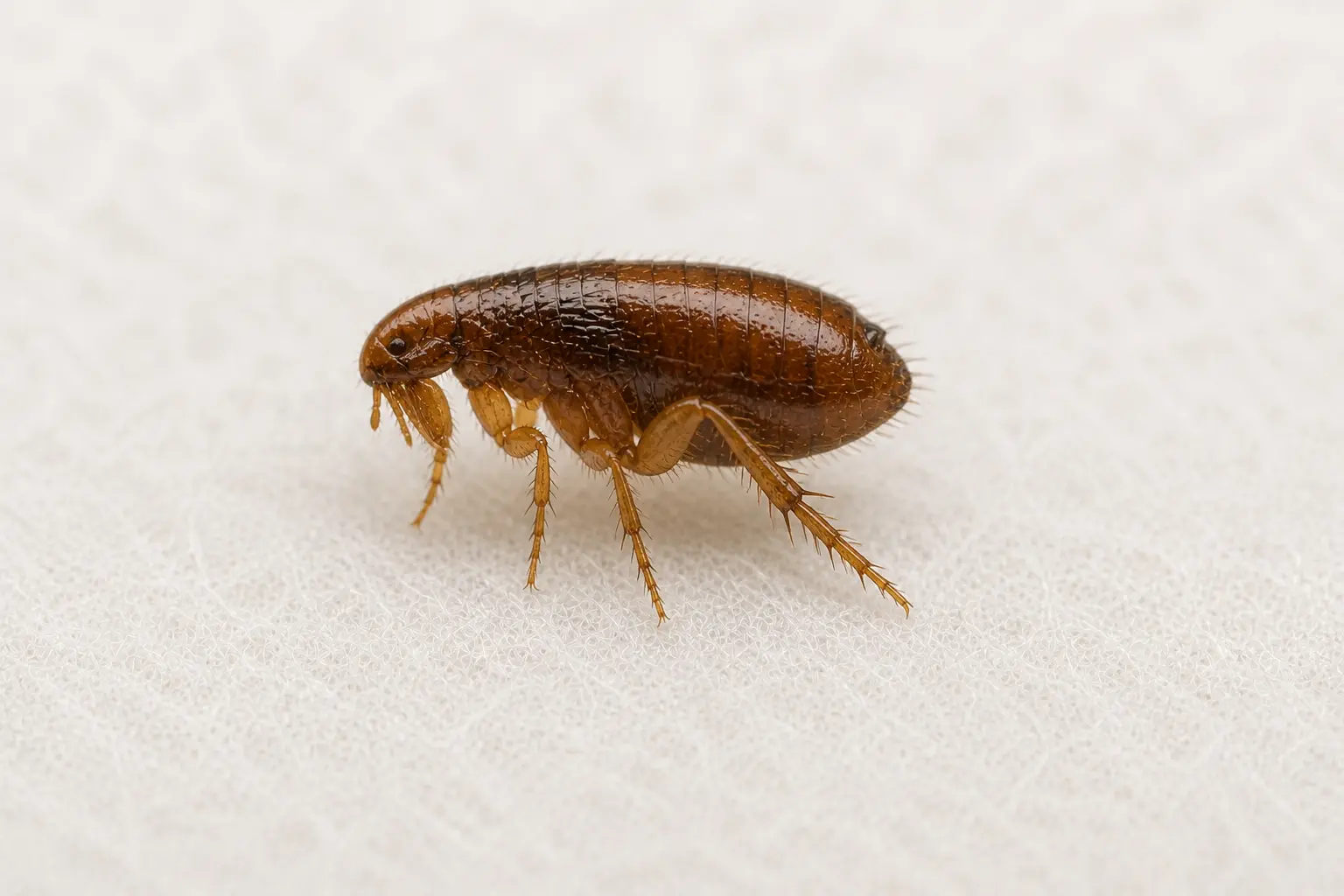
Human flea – aggressive blood-sucking parasite and dangerous sanitary pest
Human flea – aggressive blood-sucking parasite and dangerous sanitary pest
The human flea (Pulex irritans) is a blood-sucking parasite that feeds on the blood of humans and animals. Although today it is more commonly associated with pets and wild animals, it can still cause serious problems in homes, farms, and businesses.
Adult fleas are 2–4 mm long, dark brown, with powerful hind legs that allow them to jump up to 30 cm. They are resilient, reproduce quickly, and can survive for several weeks without feeding.
Why are human fleas dangerous?
1. Painful and itchy bites
Human flea bites:
- cause intense itching
- may trigger allergic reactions
- often appear in clusters on legs and ankles
Scratching can lead to skin infections.
2. Transmission of diseases and parasites
Human fleas can transmit:
- bacteria
- helminth eggs
- tapeworms such as Dipylidium caninum
- viruses and other pathogens
Historically, they have been associated with plague transmission, highlighting their sanitary risk.
3. Rapid reproduction
Fleas lay eggs in:
- carpets
- bedding
- sofas
- floor cracks
- pet resting areas
In warm conditions, they develop within 7–14 days, leading to rapid population growth.
4. Long survival without a host
Flea larvae and pupae can survive for months, waiting for vibrations, heat, or CO₂ that indicate the presence of a host.
Where are human fleas most commonly found?
Human fleas usually appear in:
- residential spaces
- bed areas
- carpets and upholstered furniture
- farms and sheds
- areas where animals are present
- old buildings with dust and organic debris accumulation
They can easily spread between rooms and apartments.
How to recognize a human flea infestation?
Signs:
- red, itchy bites on legs and ankles
- black specks (flea droppings) on carpets or bedding
- moving dark insects on skin or textiles
- increased scratching in pets
- bites appearing after staying in a specific area
If these signs appear, the infestation is usually already active.
Why should human flea control be done professionally?
Human fleas are resilient and hide deep within textiles. Household treatments usually affect only adult fleas, not eggs or larvae.
BAUME provides:
- professional inspection of premises
- targeted chemical treatment with certified products
- ULV cold fogging treatment
- treatment of carpets, furniture, and bed areas
- repeat treatments if necessary
- recommendations for prevention and hygiene
We eliminate all life stages, ensuring long-term results.
How do human fleas enter indoor spaces?
Most commonly:
- via pets – cats and dogs
- on clothing or footwear
- from yards and sheds
- from wild animals – hedgehogs, foxes, rats
- from neighboring apartments
Fleas are not related to dirt — they can appear anywhere where there is warmth and a potential host.
BAUME – professional human flea control
We provide:
- effective flea extermination
- safe solutions for humans and pets
- services for private and commercial properties
- long-term prevention and monitoring
- fast response and professional communication
Human flea problems are fully solvable — with a professional approach and the right methods.
Need to book a service urgently?
Contact us and we’ll arrange the fastest solution for your property.
- Safe and controlled methods
- Fast response and a clear process
- Prevention advice after treatment