Wasps and Hornets – Aggressive and Dangerous Flying Insects
Wasps and Hornets — Dangerous for Humans and Pets
Wasps and hornets are social, aggressive and territorial flying insects that can pose serious risks to human health and safety.
They build nests in attics, roof structures, ventilation shafts, under terraces, in tree cavities and other hard-to-reach areas.
Although they play an important role in the ecosystem, near people they become dangerous pests, especially during summer and autumn.
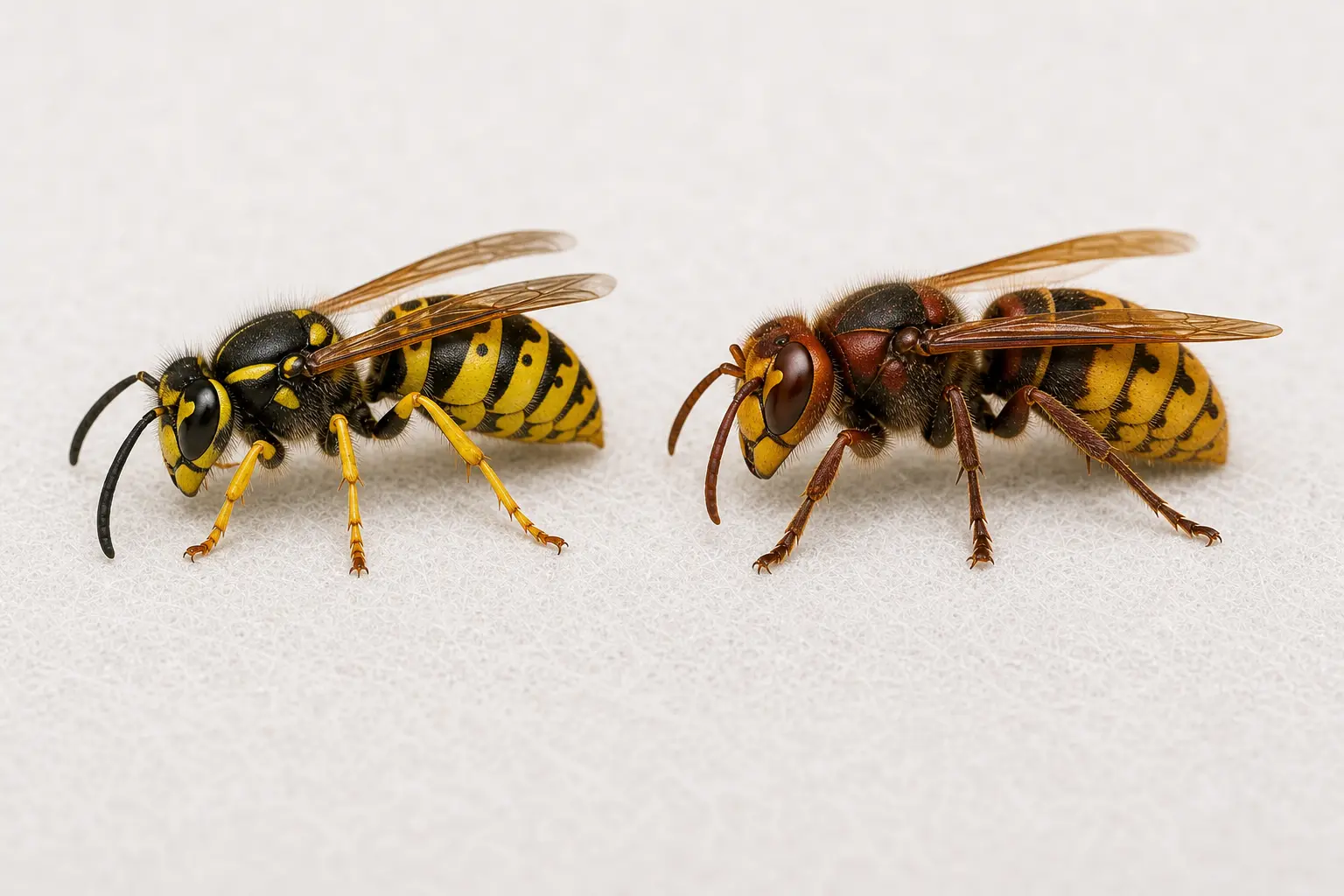
How Do Wasps and Hornets Differ?
Wasps
- slender, bright yellow with black markings
- aggressive, especially when their nest is approached
- build paper-like nests in building structures
Hornets
- larger and more robust than wasps
- darker in colour — brownish or black
- stings are more painful and more dangerous
- often nest in tree cavities or underground
Stings from both species can be extremely painful, and multiple stings may cause serious health complications.
Why Are Wasps and Hornets Dangerous?
1. Painful and Dangerous Stings
Stings can cause:
- swelling and pain
- allergic reactions
- anaphylactic shock (life-threatening)
Especially dangerous for children, the elderly and people with allergies.
2. Aggressive Behaviour
Wasps and hornets:
- defend their nest
- attack in groups
- react to vibrations, noise and movement
Even accidental proximity to a nest can trigger a mass attack.
3. Rapid Reproduction
A single queen can produce hundreds of workers in one season, and the nest grows quickly.
4. Dangerous for Pets
Stings may cause:
- throat swelling
- breathing difficulties
- shock
Pets often try to catch wasps, increasing the risk.
Where Do Wasps and Hornets Build Nests?
Most commonly:
- attics and roof structures
- ventilation shafts
- under terraces and balconies
- sheds and garages
- tree cavities
- underground (especially hornets)
- inside walls and insulation
Nests may remain unnoticed until they become dangerously large.
How to Recognise Wasp or Hornet Activity
Signs include:
- increased insect activity around the building
- visible nest or nest fragments
- loud buzzing in attics or walls
- insects entering through ventilation openings
If a nest is visible, never approach or attempt to remove it yourself.
Why Professional Removal Is Necessary
Wasps and hornets are highly aggressive, and removing nests without protection is dangerous.
BAUME specialists provide:
- safe nest removal
- professional protective equipment
- certified and effective treatments
- complete nest neutralisation
- prevention of reinfestation
- solutions for hard-to-reach areas
We work to protect people, pets and property.
How Do Wasps and Hornets Enter Properties?
Most commonly through:
- roof gaps
- ventilation systems
- open windows and doors
- tree cavities near the house
- spaces under terraces and balconies
Nests usually form in spring and become dangerous by mid-summer and autumn.
BAUME — Safe and Effective Wasp and Hornet Control
We provide:
- fast response
- professional nest removal
- safe and certified treatments
- solutions for private homes, apartment buildings and businesses
- preventive recommendations
Wasp and hornet nest removal is a task that should only be performed by professionals.
Need to book a service urgently?
Contact us and we’ll arrange the fastest solution for your property.
- Safe and controlled methods
- Fast response and a clear process
- Prevention advice after treatment